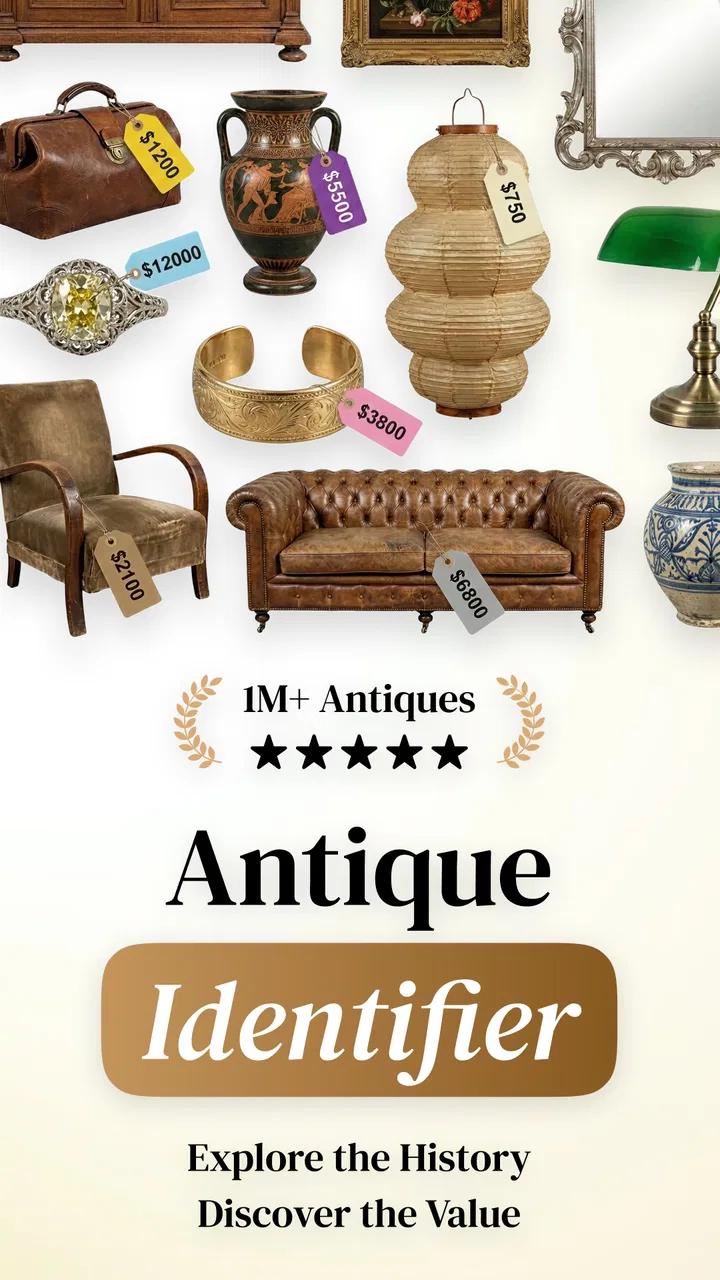
The Old: Antique Identifier
- 4.8
- Rating
- 50.00K
- Installs
- Free
- Price

 Analysis by App-foxy
I tried The Old: Antique Identifier as a practical education app for people who want a quick first look at old objects. Its main idea is simple: use a picture of an antique to get help judging its possible value and rarity, then consider whether it may be worth selling. That makes it more interesting than a basic image search tool, but it also creates an important boundary: an estimate from a phone camera is a starting point, not a professional appraisal.
That distinction shaped my experience. The app is most useful when I treat it as a learning companion for sorting, researching, and deciding what deserves closer attention. It is less suitable when I need a legally defensible valuation, a guaranteed selling price, or specialist certainty about an unusual object. In other words, I see it as a fast filter between “this might be worth investigating” and “this is probably ordinary,” rather than the final authority on an heirloom.
What you can use without paying
The Old is a free education app from LeoStudio Global Ltd., with an Everyone content rating and support for devices running Android 8.0 or later. The free entry point matters because antique identification is often occasional rather than daily. Someone clearing a relative’s house, visiting a flea market, or sorting a box from an attic may not want to commit money before knowing whether the tool is useful.
You May Also Like

 Blood Strike: 2.5 Anniversary
Blood Strike’s Loadouts Turn Every Drop Into a Tactical Gamble
A close look at Blood Strike’s custom loadouts: how fast access to signature weapons reshapes its battle royale rhythm, rewards preparation, and narrows the gap between fights.

 Pandora - Music & Podcasts
Pandora’s Music Is Easy to Start, but Harder to Recover
Pandora’s strength is its low-effort path from a seed to a station. Its weak spot is how much confidence it asks you to place in connection, setup, and quiet recovery.

 8 Ball Pool
 Is Built on Rivalries, Rematches, and Routine
A close look at the rivalries, rematches, shared routines, and unanswered safety questions that turn a quick pool match into a persistent mobile community.

 Samsung Music
’s Quiet Strength Is Playing What You Already Own
Its reach comes less from spectacle than from dependable access to a personal library. That simplicity is both the app’s strongest retention engine and its ceiling.

 AccuWeather: Weather Radar
AccuWeather Review: A Quick, Clear Forecast for Everyday Decisions
For everyday plans, the best forecast is the one you can understand quickly. AccuWeather makes rain timing, radar, and local conditions easy to act on, with a few trade-offs.

 Hill Climb Racing
Why Hill Climb Racing Still Turns Crashes Into One More Run
A tiny car, a bumpy hill and one more upgrade: Hill Climb Racing keeps resurfacing because its simple chaos makes every near-miss feel personal.
More From Our News Desk
View All News


There are also in-app purchases priced from $4.99 to $34.99 per item. That range makes the value question more personal than a simple “free or paid” label. I would begin with the accessible portion of the app and only consider spending after testing whether its results help with the kinds of objects I actually own. A purchase makes more sense when the app becomes part of a repeated research workflow, not when I only have one uncertain vase to check.
The app has a 4.8 average from around 600 ratings, with dozens of written reviews, and it has passed 10,000 installs. Those figures suggest that people are finding the concept appealing, but they do not tell me that every category of antique will receive equally useful results. A high overall rating can reflect a smooth experience with common objects while a specialist item still needs a human expert.
The current version is 1.0.4, and the app was released on November 27, 2025. That relatively early position is worth keeping in mind when deciding how much to rely on it for an important sale. I would keep the app updated and treat each result as one piece of evidence, especially if the object has family, insurance, or financial significance.
How I would start an identification
I would not photograph an object immediately after pulling it from a dusty cupboard. First, I would wipe away loose dirt without polishing or altering the surface, place the item on a plain background, and use even light. Marks, signatures, joins, labels, handles, feet, and damage can be more informative than the front design, so I would capture those details separately rather than relying on one attractive picture.
This is one of the app’s most useful practical lessons, even though it is easy to overlook: the quality of the evidence going in affects the usefulness of the estimate coming out. A reflective silver-colored object photographed under a bright lamp may hide engraving. A dark wooden piece against a dark table may lose its edges. Taking several clear views gives me a better basis for judging the result than repeatedly photographing the same angle.
I would also record what I already know before scanning. Where the object came from, whether it has a maker’s mark, and whether it belongs to a matching set can change how I interpret the app’s suggestions. I would keep those notes separate from the app’s output so I do not accidentally turn a possibility into a claimed fact.
Why the value estimate needs a second step
An estimated value can be helpful for prioritizing research, but it is not the same as a completed sale. Antique prices depend on condition, authenticity, provenance, regional demand, completeness, and the venue where the object is offered. Two visually similar pieces can have very different outcomes if one has a documented history or an original component that the other lacks.
For that reason, I would never use a promising estimate as the only basis for setting a selling price. I would compare the result with specialist references, recent marketplace listings, auction records, or an appraisal from someone who handles that object type. The app can help me decide which items deserve that extra effort, saving time during an initial sort.
The same caution applies to rarity. “Rare” can mean that an object is less commonly encountered, but scarcity alone does not guarantee demand. A damaged item may be unusual yet difficult to sell, while a familiar design in excellent condition may attract more interest. I find the rarity angle useful for generating questions, not for making a final claim about desirability.
Where the app delivers real value
The strongest use case is early-stage organization. Imagine I am helping clear a family home and find several boxes containing dishes, framed pieces, small metal objects, and old decorative items. Instead of researching every object in depth, I can photograph them, note the app’s estimates, and create three groups: items for ordinary donation or resale, items needing closer inspection, and items that should stay together as a possible collection.
That workflow is more valuable than scanning one object for entertainment because it turns the app into a decision aid. I can label each photo with the object’s location, condition, visible marks, and the date it was found. If something appears promising, I can stop handling it unnecessarily and seek a more specialized opinion. If several similar objects produce related results, I can research them as a group rather than starting from scratch each time.
A second useful scenario is shopping at a market. I would use the app discreetly and avoid treating its estimate as permission to make an impulsive purchase. The better approach is to scan an object, inspect its condition, look for repairs or replacements, and then ask whether the seller’s price leaves room for uncertainty. An estimate can help me form a research question, but it should not override careful physical inspection.
The app can also support learning. When I encounter an unfamiliar style, I can use the identification process to notice recurring visual clues: shapes, materials, decorative patterns, construction details, or maker marks. I would keep a small personal catalog of objects and outcomes, then compare later expert information with the app’s first impression. That turns quick scans into a gradual education in recognizing patterns.
Another non-obvious benefit is triage before selling. Rather than uploading everything to a marketplace, I can identify pieces that may need better photographs, measurements, provenance notes, or a specialist category. This reduces the chance of writing a vague listing for an object that deserves careful handling. It also helps avoid spending time researching items whose condition makes a high return unlikely.
How it compares with familiar alternatives
A general visual search service is often better for finding visually similar images, identifying a broad object type, or discovering common design references. The Old is more focused on the questions antique owners tend to ask: what might this be, could it be uncommon, and is it worth investigating for a possible sale? That focus can make the process feel more relevant than a broad search, particularly when the object is decorative rather than easily described in words.
However, a general search tool may provide a wider range of external sources, while this app is not a replacement for browsing auction archives or contacting a specialist. A marketplace search is useful for seeing how sellers describe similar items, but asking prices are not completed sale prices and may be optimistic. A professional appraiser remains the stronger choice for insurance, inheritance disputes, authentication, or an expensive transaction.
I also prefer a physical inspection when construction matters. A picture-based tool may help with recognition, but it cannot substitute for examining weight, materials, joinery, wear, repairs, and marks in person. For ceramics, jewelry, furniture, art, and objects with possible restoration, the camera should begin the investigation rather than end it.
Tradeoffs I noticed in the decision process
The biggest tradeoff is speed versus certainty. The app makes it easier to form an initial opinion, but fast feedback can encourage overconfidence. If the result sounds exciting, I need to become more skeptical, not less. I would photograph the object again, check every visible mark, and compare independent sources before mentioning a high value to a buyer.
A second tradeoff is convenience versus context. A single image is quick, but it can omit the detail that separates a genuine period piece from a later reproduction. My practical rule would be to use a main image for the overall form, close-ups for marks and damage, and side or underside views for construction. If the object cannot be moved safely, I would accept a less complete result rather than risk breaking it.
There is also a cost tradeoff. Since the app is free to start but offers purchases between $4.99 and $34.99 per item, I would not buy anything simply because an estimate is intriguing. I would first ask whether the paid value improves a recurring task I genuinely have, such as organizing a large collection or researching many inherited objects. For a single low-value item, free access and ordinary research may be the more sensible choice.
Finally, the app may not suit users who want a full selling service. Its purpose connects identification, estimation, rarity, and selling decisions, but those are separate stages in real life. Finding a possible identity does not prepare the object, choose a trustworthy venue, negotiate with buyers, arrange shipping, or prove authenticity. I would still handle those steps myself and keep photographs and notes as a record.
Who is likely to get the most from it?
I would recommend it to curious owners, beginner collectors, families sorting inherited belongings, flea-market visitors, and sellers who need a quick way to prioritize research. It is especially useful for someone who has many mixed objects and does not know where to begin. The educational angle makes it approachable for people who are interested in antiques but are not ready to learn specialist terminology first.
It is also a good fit for a cautious workflow. I can scan, document, compare, and then decide whether an item deserves expert attention. That sequence is more responsible than asking for an estimate and immediately listing the object at the highest imaginable price. Used this way, the app helps me spend my limited time where it is most likely to matter.
I would skip it, or at least avoid relying on it, if I needed formal documentation, authentication, insurance support, or a valuation for a major financial decision. Experienced collectors may also find a specialist reference library more useful for a narrow field. Someone who dislikes taking photos, recording details, or checking results against other sources may not get much from a picture-led tool.
People should also be careful with emotionally important objects. An app result can make a family keepsake seem worthless or unexpectedly valuable, but neither conclusion should determine what happens to it. Sentimental value and market value are different, and the right decision may be to preserve an object even when its resale estimate is modest.
My buy-or-skip verdict
I would start with the free access because it lowers the risk of trying the idea. The app offers a practical first pass for identifying antiques, thinking about rarity, and deciding which objects deserve deeper research. Its best value is not a magical price prediction; it is the structure it gives to an otherwise messy sorting process.
I would consider a paid purchase only after seeing whether the app consistently helps with my own collection and whether I need it often enough to justify the cost. I would not pay based on the hope that one scan will reveal a fortune. The price range makes careful testing especially important, because the right purchase depends on the user’s workload and expectations rather than on the app’s headline concept alone.
My final view is positive but measured. The Old is worth trying as an antique-research starting point, not as a substitute for expertise. If you want quick guidance while sorting objects or learning what details matter, it can make the first step easier. If you need certainty, legal confidence, or a specialist judgment, I would put the app at the beginning of the process and bring in a human expert before making an important decision.
FAQs for The Old: Antique Identifier
01What is The Old: Antique Identifier app used for?
The Old: Antique Identifier is an app designed to help users identify and learn about antiques and collectibles. By simply taking a photo or uploading an image, the app provides detailed information about the item's history, origin, and estimated value. It's a great tool for collectors, enthusiasts, and anyone interested in antiques.
02How accurate is the identification process in the app?
The app uses advanced image recognition technology combined with a vast database of antiques to provide accurate identifications. While it is generally reliable, the accuracy can vary depending on the clarity of the image and the rarity of the item. For unique or rare pieces, consulting an expert might be necessary.
03Is The Old: Antique Identifier available for both Android and iOS devices?
Yes, The Old: Antique Identifier is available for download on both Android and iOS platforms. You can find it on the Google Play Store for Android devices and on the Apple App Store for iOS devices. Ensure your device meets the app’s requirements for optimal performance.
04Does the app require an internet connection to function?
Yes, an internet connection is required for The Old: Antique Identifier to access its online database and perform real-time analysis of the images. This ensures that users receive up-to-date information about the antiques they are identifying. Offline features are limited to previously saved data.
05Are there any costs associated with using The Old: Antique Identifier?
The app is free to download with basic identification features. However, there are in-app purchases and subscription options that provide enhanced features such as detailed provenance reports, unlimited identifications, and ad-free usage. Prices vary, so it’s best to check the app for the latest information.
Pros
- Accurate identification of various antiques.
- User-friendly interface with intuitive navigation.
- Regular updates with new antique categories.
- High-quality images enhance identification.
- Offline mode available for field use.
Cons
- Limited free features without subscription.
- Occasional misidentification in rare items.
- Requires stable internet for best results.
- Ads can be intrusive in free version.
- Some categories lack detailed information.

The Old: Antique Identifier
Gallery